Semester's Ending Thoughts

Posted by: owleyes333 / Category: ,

As the semester ends, I have looked back at some of my blog posts, flipped through the books, and come to the following conclusion: Environmental Science is depressing. There's no way around it. Our world just gives and gives while all we do is take and take. Our society is spiraling down a hole that we may never be able to recover from. Its a bleak future ahead...if we do not take action. The goal of this subject is not to make our future seem hopeless. The goal of this subject is to enlighten minds - to make everyone aware of what is happening in their world so that they can change it before it is too late. And there are so many things to change it seems impossible to know where to begin! But, as this class dwindles down I have found that the issues that have resounded with me the most so far are the following:

Depletion of Non-Renewable Resources

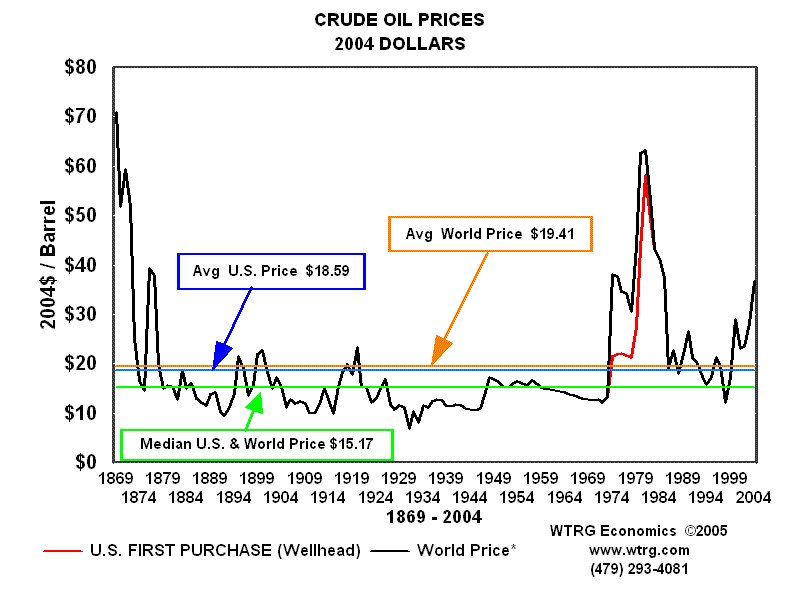
And yes, I am talking specifically about oil. In my life, oil has always been a problem. Growing up, I would always here "What? Oil prices skyrocketing again? I remember, back in my day, it was 25 cents a gallon!" Or, you know, something like that.

(If you like, you can view a Crude Oil Price Report Here):
Courtesy of WTRG Economics.

And then comes war. At first, it was for retaliation (or "patriotism"), but then somewhere along the lines it became known that we were killing all these people for...what? OIL? Is oil really this important? Is there really no other alternative to bloodshed?

Courtesy of Democratic Underground.

Why is this such a big deal? Why do we have to depend on this? We use oil in almost every process, and we are running out. People are in a frenzy because all of those scientists that forewarned them of this were actually right. All of it will be gone one day because we took more than the earth could give. And now we're paying for it. But there are plenty of other options! People just need to open their eyes. If you were given the chance, wouldn't you rather pay for another opportunity than die for a pipe dream?

Here are just a couple links to some articles that further stress the dependence we have on oil, and the importance of alternative fuels. Sure, each set comes with its challenges, but at this point ANYTHING is better than the oil we have now.

MSNBC: "Aren't There Alternatives to Oil?"
Oil Crisis: The Coming Global Oil Crisis

One of the COOLEST things I remember seeing this semester was algae oil. This is a biodiesel made from algae! How awesome is that? If you are interested, I am sure this website Oilgae, can inform you better than I ever could!

So, after you visit that site you'll be pretty jazzed and excited (I hope), so now that you are in good spirits, let us move on to the next depressing topic:

Global Climate Change


Ah, yes. The big GCC. Can you believe that many people still think it is a myth? I don't know about you, but I live in Southern California, and one of the many reasons why I hate this place is because it is H.O.T. So, when I first heard about Global Climate Change (in elementary/middle school), I could see how it could be true. When I moved to Riverside, I fully understood. Our weather is getting pretty weird, if you ask me. SUPER hot one day, raining the next day? And then rain and sun at the same time? I thought that was a Hawaii thing, not a Sunny CA thing. But what do I know, right?

Don't believe me? These sites ought to prove the myth wrong, then:
EDF.ORG: The Environmental Defense Fund
NY TIMES: Global Warming
EPA.GOV: Environmental Protection Agency
NATIONAL GEOGRAPHIC: Fast Facts on Global Warming

Ending thoughts:

Courtesy of GlobalWarming2009.Blogspot.

Waste Management


This was our latest topic in class, and one that I had to debate on. So what's my view on it? Well, I believe recycling IS GOOD ONLY IF IT IS DONE PROPERLY. Otherwise, its kind of a waste. You have to educate yourself on it, and a lot of people are not willing to take that extra step. Now, what do I think about the entire waste management process? Well, it needs a shit load of work. We waste SO MUCH. Its really quite revolting, but no one really sees it. Its not like there's a wall of all the shit we use up in a heap in the middle of New York City. Its hidden, and because of that, people do not understand - do not care to understand - and just continue on in their daily lives. Its a SYSTEMATIC PROBLEM.

Courtesy of A GreenSpan.

So what do we do about this? This is one of those things that I believe where yes, one individual can make a difference in their family and friends, but that those family and friends can make a difference within their community, and that community within a city, within a state, within a country... but it requires extreme effort, and most importantly, education. It requires a type of 'reteaching' that should be implemented everywhere... INCLUDING SYSTEMS. That is the most important part. And without any strong environmental activist advocating this in government, our efforts may just be in vain. We need change, and that is something everyone is afraid of.

Another thing people should be afraid of is...

Environmental Hazards & Human Health


This was the issue that hit me the hardest. I already have an ailing father on a strict diet, who goes three times a week to essentially get his blood cleaned out and "recycled." Every time he leaves to go I would think, "Well, they will clean out all the bad things and bring him back to me," but then I find out about all these hazards...

DDTs
BPAs
PCBs

AND SO MUCH MORE! There are toxins EVERYWHERE! It is so impossible to escape them. They are on plastic bags, baby toys, phones, televisions, EVERYTHING! How is my dad supposed to escape these? How is he supposed to get better when he is exposed to these things DAILY? How is ANYONE supposed to be better? We cannot be expected to live long, disease free lives. We are loosing our strength and our resistance sooner rather than later. It is causing diseases not within our own bodies, but our children and our children's children! And what is the government doing to help? Nothing. Which brings me to my main point.

What Can WE Do About It?


We can build an army of advocates for better, healthier, more sustainable lives. We can ELECT someone into government who is actually, truly, and deeply concerned about these types of matters. Sure, politicians are all sleazy so it may be difficult to find someone, but that does not mean that person does not exist. It just means we have to look harder, educate more, and inspire as much as we can! We need points to come across, eyes to open and minds to work! But I'm not going to lie. Its going to take some time. That's why its important to start with the individual.

What Can YOU/ME Do About It?


This is where the individual comes in. This is where you can help by doing simple things like:

Spreading the Word. TELL people about the things you learn! Do not keep it to yourself. Educating does not end with you. If you hear about something that is harming you or your environment, let others know so change can come.


Reduce. Reduce your need to purchase, purchase, purchase. Do not get carried away. Just buy what you need, and do that wisely. Think ahead.

Reuse. Do you really need to go out and buy that thing that you already have? No. Reuse things as much as you can! Why do you need to waste it? Its worth more than just one run.


Recycle. Look into how to recycle properly, and implement the practice. In your home, at your work, at your school, everywhere you go. Recycling helps.

Create. Scarves, hats, socks... these things can all be made. You don't need to go out and buy a whole lot of them. Create them. Make them yourself. And, on top of that, be creative. Reuse things in different ways - use your imagination. There's always something you can make out of "trash."


Stay Away From Plastic! I know its everywhere at the store, but if you don't try your best to avoid it, it ends up everywhere in our oceans - killing relentlessly. Do your part, and save a sea turtle while you are at it. Have reusable bags or, if you have to, use paper bags.

Make Your Own Food! Stop going to fast food places. It makes you lose your connection to the food you are eaten. It depreciates it. Make your own food, and you will appreciate it more. The taste, the smell, everything! And grow your own food while you are at it. Start small. Buy herbs you can grow in your kitchen, then tomatoes, cucumbers, whatever your heart desires!

Lessen Your Meat Consumption. Yes, I know they say being a vegetarian is the ideal goal, but  not everyone can do it. It was extremely difficult for myself to accomplish, and it took viewing something completely devastating for me to change, so trust me when I say I know its difficult. And I am NOT the kind of person to push this on others. I'm just saying, eat less meat. And, if you could, grow your own chickens! Or pigs. But pigs are not as healthy. (Super cute, though).

Unplug. I promise you that if you are not already conscientious of this, there is at least one thing in your room or in your house that is plugged in but not even being used. So go unplug it. It really does help. And why do you need it plugged in anyway? Its not doing anything.

Think! Be aware of what you are purchasing, where it comes from, and what goes into it. Know what you do and what you give to your environment - the positive and the negative. Appreciate all the work that goes into the things you have, and value it. Life is not disposable. Why should anything else be?

GIVE TO YOUR COMMUNITY! This is one of the most important things. You can educate and strengthen your community. This change is not going to take place on just an individual level. Its is going to be a communal level and one day, global level.

There Is A Lot More to Do


...but I can't sit here and dictate it all to you. The most interesting aspect about this subject is that it applies to YOU. Its all about what we can do as a people, and what you can do as an individual. So be active, be responsible. Know what you are doing and how you can make a difference.


Read more »

Human Hazards

Posted by: owleyes333 / Category: , ,

Recently, I read the article "Regulating toxic chemicals: Do we know enough about chemical risks?". Any guesses as to what it was about? As much as you may have hated studying chemicals in chemistry (like I know I did), chemicals really are in everything. What has concerned most Americans today, however, is the strength of them. Companies have created and placed chemicals into products which everyone uses (bottles, pillows, and a WHOLE lot of technology, just to name a few). These chemicals, such as the toxin used to make pillows flame-retardant (as seen in "The Story of Stuff") were (supposedly) initially created to help prevent catastrophes, not start them. So how is it that this went wrong? Let's consider regulations.

My favorite issue that this article brought up was the following question: "Would stricter regulations hurt manufacturers and consumers?" The second I saw this question, I was thrust into a world of confusion. As far as I was concerned, the loose regulations were ALREADY HURTING manufacturers and consumers alike. How could fixing them and making them less toxic hurt them even more? Initially, I could only see the possible pain resulting from the pockets of the manufacturers, because it would cost them the most if regulations rose to stricter heights and forced them to re-test and cross test all of their chemicals prior to (re)entering the market. It would mean that hundreds of thousands of products would have to be recalled. Not to say that this has not already been done.

Do any of you remember these?

(Picture courtesy of money.cnn.com)

I know I do. I was not particularly fond of this film when these cups became available at McDonald's, but the cups themselves reminded me of older but similar cups I collected in my childhood. So, being the naive consumer that I was, I rushed to buy a cup of my own. I had nearly the whole collection when I heard I had to return them. What? Return them? I had only just bought them. What could have possibly gone wrong? 

Refer to money.cnn.com. And countless other websites and news reports, because it was quite a big deal. These promotion pieces contained low levels of cadmium; a carcinogen which, if exposed to for a long period of time or at high levels, can cause kidney and bone damage. So please, Consumer Product Safety Commission, inform me on why this happened. Because, according to the aforementioned article, you said this:
"A CPSC spokesman said the agency is working to establish a "highly protective" level of cadmium. These glass products were slightly above that level, he said, even though the agency has not yet established an acceptable cadmium standard."
Uh, excuse me? There is an "appropriate level of carcinogens companies are allowed to use in their products which will touch the lips of humans everywhere"? Since when did this happen? Since when was this okay? Why is this still okay? How is this statement supposed to, in any way, assure me of the fact that my loved ones are safe from toxins when just previously mentioned in the article was the fact that this particular toxin is TOXIC EVEN IN LOW DOSES. A poison is a poison, no matter how many times you try to "fix" it. Its still there. It still has the capacity to kill.

But I digress. I have gotten slightly off topic. The issue at hand whether or not a stricter regulation could harm a manufacturer or consumer. My answer, yes. It will.

If stricter regulations are put in place, and I am talking about extremely strict regulations, EVERYTHING would have to be retested for toxicity levels. But, those kinds of regulations are not really realistic, are they? So then, lets consider what would happen to manufacturers and consumers if the "Precautionary Principle" was implemented (in ALL of this country, and worldwide). For those of you who are not familiar with the precautionary principle, it is essentially the belief that every chemical is unsafe until proven safe, much like the European's "guilty until proven innocent" principle.

It is brilliant in theory, and has received much praise from Science & Environmental enthusiasts. But for manufacturers, this poses a financial threat. This would mean they are no longer allowed to just create a chemical, assume its safe, and plaster it on something as often used as a glass. No, this would mean that once their chemical was created, they would have to go through loops and bounds to prove its innocence before it was placed on those cups. And what if it was not innocent? What if it was indeed guilty? Well then, those manufacturers would have to spend even more money to come up with yet another chemical to test and test and test in the hopes that it would be more innocent that the previous chemical.

This "Precautionary Principle" would take a lot out of the manufacturers products, but could possibly save lives or, at least, extend our already failing average lifespan. This could also potentially save manufacturers from class action suits in the long run - and that's the kind of take we really have to try and imagine here. Sure, these chemicals may seem safe now, but they won't be in the long run. Is not the main goal of every business to try and stay alive? How can they do that if the very chemicals they are creating are killing their workers and consumers? There won't be any one left to run their toxic company. So please, tell me how implementing this principle is not a bad idea?

Now, I am not saying that this principle is going to solve everything, because that is not true. This principle is only applicable with new chemicals. There is no mention of retesting the old chemicals which are still active in the market. Its an enormous step, implementing this plan, but it is still not all we have to do. But, in this foreseeable future, at least it is something.

Before I read this article, I thought the answer was simple. I thought it would always be a matter of choosing life over toxins, and while that should always be the focus, my view is not the only view. Large companies essentially control our government, so what they say goes. Information provided in this article should work to motivate individuals to inspect their products. To assure that they are the safest they can be in everything they purchase. So if there is one thing that this article has inspired in me, it is my belief that everything costs money, even safety; but wouldn't you rather be safe than sorry?

If you would, here are a few links you might find interesting. I know I did.

Organic Consumers is an organization which aims to educate people on just how many toxins are readily available in the market and at home, and how to discourage their use and turn toward a more toxin-free, organic environment similar to what Canada's Labour Environmental Alliance Society aims to do. If you click on their link, you will find a specific list of some of the more harmful toxins found in most household products. And if that entices you, you might find The Less Toxic Guide to be far more interesting with its extensive lists of chemicals used in products, as well as a product category you can use to directly look up chemicals in things such as drain openers, laundry starch, disinfectants, spot removers, and a lot more. So give it a chance if you are interested. You will be shocked at how much you learn, and how unsafe products truly are.


Read more »

24 Hour Technology-Free Log

Posted by: owleyes333 / Category: , ,

As much as I dreaded the idea to spend an entire day without my computer or television or any other form of technology, I was really rather excited to see how I would handle myself in this situation. I told quite a bit of people what I did, and after the confused faces and crazy eyes, I always got this question:


What did you do?


What did I do? I really did not do much of anything as far as activities go. I would think, "Hey, this would be a good time to write a short story!" And then I would head to my computer only to realize I could not use it. When I went to write the story by hand, I just felt like I was using too much paper and that my words could not be written as fast as I was thinking them. So instead, I read quite a bit. I used to love reading, but I have been distracted by things like Angry Birds, Facebook, the notorious Facebook games, movies, television shows, and so much more. But now that I did not have access to many of these things, I found time for myself.

With all of this "self" time, I decided to have a kind of spa day, and just pampered myself. But, not being one to dwell on trying to make this ugliness that is my face go away, I could not spend all day doing this. So I started in on some crafts. I worked on a blanket I have been crocheting, and when I got into a bit of a boredom slump, I made birds out of fondant and began launching them at pigs.

To be honest, I would have gotten really bored if I had spent all of this time by myself. Luckily, I had friends and family to spend my boredom with, and so I talked quite a bit. But the second they went to turn on the TV, I ran off and started cleaning something in an other room so I could not hear it or participate in watching it.


And so now came the question:

What did you do that was different? What did you do that saved energy?


For one, I shut off the central air. We really do not need it. Our house is insulated nicely, and the day was relatively cool (until later in the day when it started to ran quite a bit). But when it rained, I found it to be much more comforting to curl up in a blanket(s) and just chat (or read).

I could not take a cold shower. I chickened out. I did, however, take a luke-warm shower and then, when it came time to shave, I shut off the water and just used a damp towel to get the job done. It took a bit more focus and precision, and I came out of it with a few more cuts, but whatever. It really was not much of a difference - it was just more time.

I unplugged everything. i have often heard that if there is nothing plugged in while you sleep, you sleep really well. I never really thought I could tell the difference but I did this night. I fell asleep quickly and easily - but it was by candlelight so I had to wake myself up again, turn it off, and head back to sleep. But it really was not too bad.

In the End, there are two parts.


There are things I can and cannot live without.


Things I CAN Live Without:


For one, I can certainly cut down on my shower time. I typically spend 30 minutes in the shower, wasting water, when I can really just spend half of that time in there, or less. Sure it will take some practice, but it would give me more time to do other things, so that is always good.

Secondly, I can definitely stop watching as much television. I definitely watch a lot of it, and even when there is "nothing on" I still have something playing, just for background noise.

Thirdly, I could live without the heater. I like curling up in blankets. But, I have never been a nice person in the heat so I am not too sure whether or not I could give up on air conditioning too. I guess I will just have to test it out in the summer and see how things go.

Fourthly, I could definitely do with doing more things outside. I spend a lot of time in doors, I do not exercise much, and to be honest I could do with more of both.

Fifthly, I suppose I don't need to play games on Facebook. Its fun, but I really don't need to live and breath Cityville. I can take the time to turn down my virtual city and replace it with my real city. That sounds nice, right?

Things I Cannot Live Without:


First, my phone. I really cannot live without my phone. Games and apps aside, it serves as the only form of communication I have for those friends and family members who do not live near me. Its more than just a device. Its a link to those that I love, and I really do not think I could sever that link.

Secondly, my computer. Sure, I could spend less time on it but I cannot cut it out of my life completely. I need it for school: it is a fast, easy, and convenient way to get my homework done. Nothing is turned in written by hand. It all needs to be typed, and I need my computer to do that. Also, I love writing and doing that on paper is not fast enough for me. Not to mention the internet! I can cut back on my television viewing, but not on the internet. That's how I get the majority of my global and local news, nowadays. Newspapers cost money and are steadily declining, so I need something free and with tons of different opinions on one subject so that I can form my own. And what's better to do that with than the internet?

Aside from that, everything else is just a preference.

So, In Conclusion...


Sure, I could go and unplug everything and only plug it in when I need it. I'm sure it would save my parents tons of money on electricity, but when I brought this up to them they were not really a fan. And that's really what it comes down to. I still live in there home, so I still need to obey their rules. Of course, I will always try to keep working on them and convincing them that these things will help, but the fact of the matter is they like the convenience of having things plugged in and ready. I'm going to keep suggesting "greener ways" but its not something I feel is in my right to force upon them.

However, I can say that when I do move out, I will do things differently. I will be much more conscientious about my home, and what my home does in terms of "being green." Its just going to take some time. But hopefully, once I move out and practice living in this way, my parents can see it could be just as easy for them. If only they tried.


Read more »

Water: The Elixir of Life

Posted by: owleyes333 / Category: , , ,

On Monday, I was at the humane shelter walking a dog, when all of a sudden it began to rain. At first there were just a few measly raindrops here and there, so I thought it was safe to continue on playing fetch with the dog I had out. However, as the dog got more tired, the rain got heavier, and my main concern was trying to find a place to rest and some water for the dog. I walked him to the nearest closed space, but on the way there he kept trying to lick at the puddles on the floor or chomp at the rain. It was not until I sat him down and put a bowl of tap water in front of him that he was satisfied. And it was at that moment that I truly understood the devastation that an inadequate flow of clean, drinkable water would bring to this world. So when it came time that one of the fellow volunteers came by, laughed, petted the dog and commented on how that water was like his elixir of life, I truly had to agree. It was the same for us humans, too.


I have always thought it so silly that out of all of the water found on this Earth, humans can only drink a small percentage of it. It really does not seem fair, but what can you do? Its all we have got, and its the base of most things we need (or think we need) so we sure as hell better take care of it. And take care of ourselves as well! Its important to drink as much good, clean water as you can while you can - which brings me to this week's blog question.

Tap or Plastic?

In general, most people believe that purchased, bottled water is safer than tap water. In some places, this is true. In other places, it is not. In watching the short film "The Story of Bottled Water" it becomes clear that bottled water initially began as a marketing ploy. Large companies wanted to expand, figured soda could not be the only thing to make money off of, and so they turned their heads toward something (typically) healthy: water. So as it begins, bottled water was not even initially created to benefit us in any way. It was just made to take money from us. So how does that make it better?

As the film mentioned, there are several tests that both tap and bottled water undergo. The problem is, the tests are different based on who is regulating them. So with this idea in mind, if you went out to try to find if all tap was better than all plastic (or vice versa) you would get severely varying results. That is why for the purpose of simplifying this blog, I will instead compare two specific types of tap and plastic.

Riverside Tap vs. Arrowhead "Mountain Spring" Water

Honestly, after tasting both forms of water, I cannot tell the difference. My boyfriend swears he can, but I am pretty sure there are not many with that unique talent. Anyway, lets begin with a who's got who in terms of regulations. When it comes to Riverside tap water, they are regulated by the EPA (Environmental Protection Agency). When it comes to Arrowhead Mountain Spring Water, they are regulated by the FDA (Food and Drug Administration). It is only after knowing this that the question should be raised on which regulator is best. Examples, anyone?

FDA / Arrowhead:

Well, I suppose Arrowhead is off to a great start if arsenic is the main ingredient to their products. Not. It was not until 2005 that the FDA posed stricter restrictions on arsenic in Arrowhead's bottled waters. Ex:

On June 9, 2005, FDA published a final rule that amended its bottled water quality standard regulations by revising the existing allowable level for the contaminant arsenic. As a consequence, bottled water manufacturers are required to monitor their finished bottled water products for arsenic at least once each year under the current good manufacturing practice (CGMP) regulations for bottled water (21 CFR part 129). Bottled water manufacturers are also required to monitor their source water for arsenic as often as necessary, but at least once each year unless they meet the criteria for the source water monitoring exemptions under the CGMP regulations. This final rule became effective on January 23, 2006 (70 FR 33694).

On top of that, this is happening:


Is there sodium in bottled water?

Nearly all of our bottled waters are sodium-free. The FDA considers any water containing less than 5 mg of sodium per 8 oz. serving to be sodium-free. Here's a list of the sodium content (in milligrams per 8-ounce serving) of our most prominent products:

Arrowhead Drinking
4.8 - 13
Arrowhead Distilled
None Detected
Arrowhead Fluoridated
6.5 - 15
Arrowhead Spring
2.6 - 16
Arrowhead Sparkling
6.0
Perrier
11
Report date: December 2007 Testing period: 2nd Qtr. 2007 - 4th Qtr. 2007
For most people, arsenic would be much more impacting than sodium but in my house, sodium is one of the worst things for my dad and his condition, so it is very important that he get the least amount of sodium as possible. After reading this, I am not only concerned, but rather upset. This is important information that should be placed on the bottles and told to people who think that all bottled water is clean, clear, and similar with their 0% this or that, when in reality it is not 0%. Thank god my dad does not drink Arrowhead, and now he never will.

In Conclusion:

With these facts alone, I'm already scared off of Arrowhead water. Not to mention they claim to supply hundreds and thousands and millions of water bottles every year with water from where? ONLY North American Mountain Springs. Do I even want to know how bad they are destroying their surrounding ecosystems? Or how much water they are taking from springs that cannot produce that amount of water, let alone even more for the next year and the next and the next...

When it comes down to it, why bother with paying $2.00 for a bottle of water with arsenic when you can just bottle up some water from home or your local drinking fountain? I don't know about you, but I am a struggling college student who has in recent times become a bit of a penny pincher. I can not afford to spend a hundred dollars on water a week. And soda is not an option. And going without drinking anything (as much as I would like that to be possible) is also not an option. So I'll just use tap water from now on.

Sorry Arrowhead, you've lost a customer.


Read more »

Which Garden Is My Burger From?

Posted by: owleyes333 / Category: , ,

As curious humans, we often ask large, philosophical questions like "Where do we come from?" Though, how often do we take some time to look at the things we consume on a day to day basis and ask "Where does THIS come from?" For this blog assignment, I am take a simple product - a Gardenburger Veggie Medley Patty, to be precise - and dissecting it. Honestly, I am super curious to find out what it is I am actually eating.


Picture courtesy of Gardenburger
http://www.gardenburger.com/product.aspx?id=11631
Ingredients List:
  • cooked brown rice (brown rice, water)
  • broccoli
  • water
  • carrots
  • onions
  • whole kernel corn
  • rolled oats
  • brown lentils
  • red bell peppers
  • green bell peppers
  • oat fiber
  • ground flaxseed
  • 2% or less of canola oil
  • onion juice concentrate
  • salt
  • methylcellulose
  • natural flavors
  • soy sauce (fermented soy beans, salt)
  • autolyzed yeast extract
  • hydrolyzed wheat gluten
  • evaporated cane juice
  • spices
  • caramel color
  • garlic powder
  • yeast extract
  • onion powder
  • soy lecithin
That's a shit load of stuff, if you will excuse my French. Good news? It seems like a lot of good, healthy stuff is found in it, but to be honest, its the big chemical-looking words that freak me out. I have no idea what "autolyzed" and "hydrolyzed" means, let alone "methylcellulose." So let's look this stuff up.

Brief Chemical Definitions:

Autolyzed yeast: A form of "live" yeast combined with salt. 
Hydrolyzed: A compound broken down by a chemical reaction to water. 
Methylcellulose: A chemical compound formed from cellulose.

Once they are broken down, they do not seem too bad. But where does it all come from? These ingredients did not magically appear in this veggie patty I'm eating. There's no "veggie fairy" which comes and leaves ingredients in my freezer every night. So where does the company get all of this stuff? 

Picture courtesy of Better Homes and Gardens
http://www.bhg.com/gardening/plans/vegetable/heritage-vegetable-garden/
Where do the Veggies Come From?

After my research, I could not find the exact location of any farm that gave the company its ingredients, but I have found that the ingredients included in the patty are all grown within the US, gathered, and sent to the Gardenburger distribution center in Battle Creek, Michigan. And although being unable to find this portion of information was disheartening, I was rather delighted to find something else.

Apparently the Gardenburger company is very involved in communities, and they take the time to visit local farmers' markets around the country to show others how to cook and eat healthily. They even share tips about sustainable gardening and give money to those gardens with a strong sense of community, sustainability, and progressiveness.

So... Is it Healthy?


Yes! And its probably one of the healthiest things I eat! Gardenburgers are veggie patties that are made with real, natural ingredients. Being that they are a forward thinking, sustainable-driven company, they try to keep their ingredients as clean and natural as possible.

Now, I cannot guarantee that the Gardenburger will still be healthy in any recipe, because it is always possible to make something unhealthy. But, if you use healthy cooking tips and you keep it simple (and refrain from using a shitload of ketchup like I do) then you can definitely count on it being a much, much healthier option than a burger made of beef.

In Conclusion...


This was a very enlightening experience. I enjoyed taking the time to think about where my food comes from - but then again, if I chose to dissect something much more unhealthy, I am sure I would not come to the same conclusion. And, reading up on Gardenburger's community gardens, it has encouraged me to be more productive myself. I do not think I am ready to take care of my own plant successfully, but I do think I am ready to start experimenting with healthy cooking. 


Read more »

Sustainable Campus, Anyone? (Part 2: The Change)

Posted by: owleyes333 / Category:

Now that I have simplified a campus' sustainable components into a list found in part one, it is important to then take one of those aspects and present an example of how a campus (RCC to be specific) could change for the better. The aspect I have chosen to dissect is transportation, and this is how I am going to do it:

Interviews: Getting to the Source of the Trouble


Who would I talk to about transportation? I know for a fact that if you bring it up in class, there will be an uproar from students. They complain about parking: "There's no room!" "Its so crowded!" "I don't want to pay!" And they complain about the bus: "There's no room!" Its so crowded!" ...Well, you get the idea, right?

Despite the fact that RCC offers free public transportation, a study came out last year that showed that less than 15% of students actually use it. In fact, RCC was even considering tossing the free transportation to the curb because not enough people were using it. And I understand why. I have had to use RTA hundreds (and I'm sure thousands) of times. Its crowded, it smells, its loud, and sometimes people grab at you. Its not fun in the least. So I get why people want to drive. It may cost more that way, but its a nicer and more stress-free ride, its less hot, and you get to listen to whatever you want however you want it. But then you get to campus and the parking kills you... so neither option is really ideal.

RCC has in turn chosen to battle off some of the complaints by planning to build another parking structure. Now, can someone please tell me how this will help? This will only encourage more people to bring more cars and then we will result in the same exact problem. So what do we do instead?

Let's start by talking, asking, listening. Let's go straight to the students. Ask them why they drive, why they take the bus, why they bike. Ask them why they don't drive, why they don't take the bus, or why they don't bike. Compile all of this information, separate it in terms of pros and cons and lets see what we get and where we can improve.

Measurements: Where to Cut Down


Now, what to decide on? I am only one person, with a limited amount of ideas due to limited knowledge. If a gathering of students who are more well versed or interested in this subject got together, I am sure more ideas could emerge. For now, this is what I've got:

Cars: If a student chooses to continue to drive to campus, we should encourage carpooling. Sure, its easier said then done, but at some companies (like Disneyland for example) they encourage their employees to carpool to work, but they do it with an incentive. If a Disneyland employee carpools to work, they receive "X" amount of points toward a gift card of various amounts which they receive at the end of the year, around Christmas. Now, why can't we do something like this? Encourage carpooling with incentives. A free meal, maybe? A reimbursement of gas money? Let's ask the students what they would drive for.

Buses: I read online that there was this one school which was able to procure enough money to have their own form of public transportation. It ran the same lines as the others, but it was a different color and it was for students only, and went to specific parts of campus. Recently, my boyfriend and I ventured to San Francisco and what do you know - they have this same sort of system up there. Sure, RCC maybe low on funds, but if they offered this form of transportation for a price which is cheaper then the price of gas to and from the location, maybe students would be more willing to ride this less stressful, less crowded bus to school.

Bikes: During my research, I also managed to come across a bicycle loan program mentioned in part one of this blog post. In it, students were loaned a bicycle to get around campus and to and from home. They were also offered free repair for any damage. It is true that this would in turn solve only a portion of RCC's transportation problem, since there are some students (such as myself) who live much too far from campus to be able to bicycle there and back home in an efficient amount of time. This would, however, be a nice alternative for those students who live much closer to campus and are able to bicycle.


Permission Granted?


Here's a hard part: getting permission. Its about as intimidating as asking someone out for the first time, I am sure, but it has to get done. First and foremost, those students which are more educated in the concept of sustainability must come to an agreement upon which form of transportation is most possible. Once that form is chosen, they must sharpen every detail and place it in formal, document form. No one is going to agree to a half-ass proposal. They need something concrete.

Once the concrete is laid down, its time to get support. Make it into a petition and approach the students. See if this is the answer they are looking for, and if it is, get them to sign the petition so they can make it happen. Build up a support group and a network of people who, if the project takes off, are willing to help guide and manage it. Once you have build a strong base, take it to student council and get them to agree.

Once you are backed by the student government, approach the school itself. It will be nerve wrecking, but hold onto it. It might just make it.


Kind Words as Payment


Work, work, work. This is also a hard part. Its easy to get people jazzed about doing something, but when it comes time to actually do it, how many people will you have standing by your side? Not enough? Encourage more. For this new transport system to work, it has got to have a ton of support from the students. And if you have that support, don't fall behind. New students come every semester. Reach out to them too. Keep on reaching. You need a lot of hands to help.

As far as funds go, take in donations. Come up with events to help encourage these donations. Do not expect money from the school, because they may not have much to give. All of this has got to come from the students.

In Conclusion


There is no way to say how this is going to go unless its actually done. Things need to be thoroughly thought out and planned, with little to no room for error. You don't want to count your chickens before they hatch. (Or something like that). And do not forget, the most important things is a strong support base! Without that, you have nothing.


Read more »

Sustainable Campus, Anyone? (Part 1: The List)

Posted by: owleyes333 / Category: , ,

I am a quiet person. I keep to myself and I only come on campus when I need to. I am not part of any clubs here, and I have little to no school pride. I know are what credits I need to get out of this place and that’s about it. It may be sad, but that’s just how things are. So when I was informed of this blog assignment, I was scared. My sustainability knowledge is recent and my knowledge of this school is nonexistent. So how am I to do a blog concerning both? Answer: research. Lots and LOTS of research. And at the end of all of that, I found this:

Picture courtesy of Climate Champions
http://www.sustainablecampus.org.au/

A Basic Campus Sustainability Outline

This outline takes apart main aspects concerning a campus’ sustainability and focuses on those aspects’ individual improvement toward sustainability.  These main aspects include: buildings, energy, procurement, transport, waste and water.

With this in mind, I decided to compare RCC to other campuses and their sustainability factors for each of these main aspects, as well as list on how each could be improved upon. This is what I have concluded:

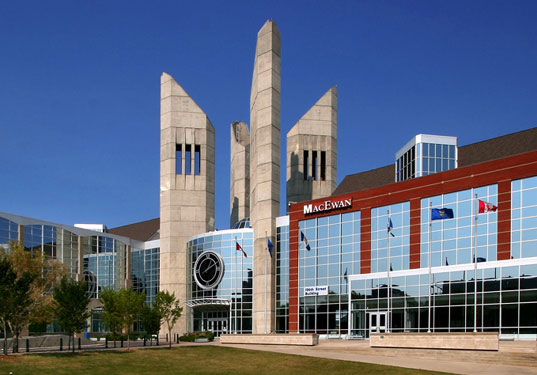
Picture courtesy of  Grant MacEwan University
http://inhabitat.com/grant-macewan-university-science-center/
Buildings 

According to the DTI regulations, in order to have a sustainable campus, the buildings must achieve maximum efficiency; maximum user health, satisfaction, and productivity; and minimum whole life cost.

According to the Grant MacEwan University website, "In May 2011, Grant MacEwan University announced the opening of its University Service Center in Canada, the first phase of its Single Sustainable Campus initiative. Built to LEED Silver Standards, the USC features natural lighting, low VOC materials, water conservation measures and a solar-reflective roof, among other sustainable actions. The building's energy performance was also optimized to reduce consumption by an impressive 40%." 

Is RCC even close to this? Not really. The RCC campus was built around 1916, and has been serving students for decades since. Although it may be true that keeping an old campus may have its benefits (since some newly remodeled campuses are not as eco-friendly as older campuses), it does not help that RCC has new editions to their campus that do not try as hard to comply with sustainability requirements. 

Picture courtesy of 123RF
http://www.123rf.com/photo_10597832_eco-energy-lamp-on-white.html
Energy

The energy aspect of sustainability is probably the most well known of all forms of sustainability, and comes in many forms. There is solar energy, which includes solar panels and photovoltaic windows. There is also wind energy, which includes wind turbines and wind farms. And last but not least there are some forms of water energy in (hydro) power and some biomass fuels.

According to the Cornell University website, " Through a cooperative effort between students, alumni, community, and administration, Cornell Outdoor Education has been able to provide enough power for lighting, computer and audio-visual technology use, a medium refrigerator, and a future water pump. This power enables the HCC's facilities to be used at night, into the shoulder seasons, and much more as a classroom and meeting space. The off-grid system is designed to provide up to 2000 Watt Hours per day, 3 days per week year round, with the potential to expand if needed."

Now I do not know if any of you have walked around the RCC campus lately, but I'm sure that if you have you would quickly realize that we are not a very sustainable energy campus. And to be fair, it is not totally our fault. If there is one thing I know about RCC it is that our campus is kinda poor. We are cutting back on a lot of classes and have low funds, so installing an expensive alternative form of energy can seem completely improbable at this point. Though, maybe within due time and with enough support this could happen. 

Picture courtesy of Core Colorado
http://www.corecolorado.org/blog
Procurement

According to HEEPI (Higher Education Environmental Performance Improvement), the process of creating and using goods and services could have a considerable amount of environmental impact which should be taking into account prior to the purchase of said goods and services. That means, of course, that the procurer of the goods and services used by a campus must be aware of the environmentally superior alternatives, and should muster up the strength to persuade the supplies to practice those environmentally superior alternatives. 

HEEPI's aim in this is to reduce waste and improve resource efficiency, secure the supply of goods and services, ensure cost savings and value for money, enhance the institution's image, create and support green markets, and to satisfy stakeholder expectations (students). They do admit that it could be a taxing process, but it does have its benefits. 

It is to my knowledge that RCC is not currently looking into a path like this, but from what I have heard this could be a point of interest for RCC's progressive Sustainability club on campus. Though, once again, it could be pricey. As with most other things of course, as the demand for these things rises, the price lowers to an affordable standard. So, I suppose we could think of changing our school's procurement process as a form of investment into our future.

Picture courtesy of Matthey
http://www.matthey.com/Sustainability2009/case-studies/environment_cs_34.html
Transport

Any form of travel (with the exception of walking or riding a bike) consumes a fuel which creates pollution. Now, I am originally from a cooler, flatter area of Southern California. So when I was growing up, I loved to walk or ride my bike around the city. The ride was nice and everything was so close so it was an ideal form of transportation. Now that I have moved to Riverside, my bicycle rots by the side of the garage. So I know what people mean when they complain about walking or riding a bike in the area they live in as opposed to the much more convenient and modern car. 

During the first couple of weeks at RCC, finding parking is a nightmare. There are thousands of cars everywhere, rushing for a spot. RCC has attempted to encourage students to ride the public bus with their free bus pass, but there is still an overwhelming amount of people who drive. So what have they done instead? They have begun plans to build a structure which would accommodate the increase in cars. This in turn will only encourage more people to take cars to school, so in essence they are taking a step back from being progressive. What I would suggest in its place is a form of carpool credit. Maybe they could come up with a carpool system for individuals that, if used would give them points toward something like a free lunch. 

According to Green Tower Campus, Pitzer College students founded a "Green Bike Share/Repair Service" in 2001, which provides students with free bike on loan. This in turn encourages eco-friendly transportation around the campus and to and from home. 

Picture courtesy of Comp Waste
http://compwaste.com/waste-partners.asp
Waste

Where does it all go? Surely everyone on this planet now knows about recycling and its importance, but how many really use it and use it correctly? That all branches off of what they know, so although education is a key component in improving a campus' waste management (as well as everything else which would make the campus sustainable), there are more simpler things to adjust first and foremost. 

So, recycling bins. Every progressively sustainable campus now has them. Even RCC has them - but not enough. I have seen a countless amount of people toss their recyclables into the regular trashcans, without a second thought. And why? Upon close observation (aka. eavesdropping), I came to find that it was because of convenience (or laziness). The tosser did not want anything to do with the bottle or can they had so they simply tossed it into the trashcan nearest them because the only other one they knew of was across campus. Preposterous. Therefore, one thing RCC could do (since there is no cure to student's laziness) is place a few more recycling bins across campus. Maybe they will be filled more often.

In Conclusion

There are many things that RCC needs to work on before it can be considered an "eco-friendly" school. And the sad truth is, its not going to be easy. That is why it is important to inspire and encourage the students so that they can fuel the change. 

But how? 


Read more »